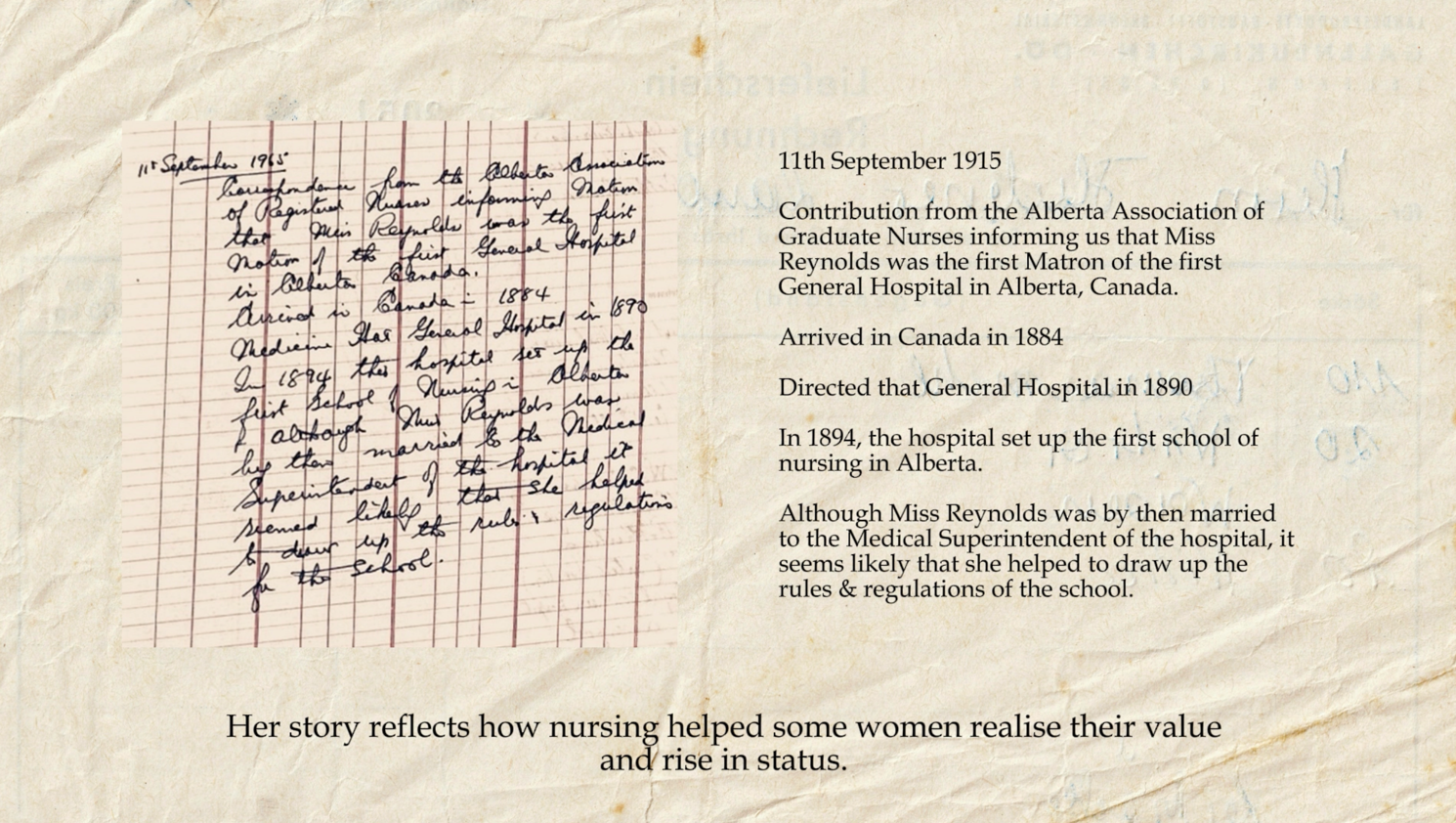
At 2:00 in the video, there is a Canadian case and its information. We chose to retain this example at the time for several reasons. The fundamental problem was that we relied too much on the automatic transcription results of a single AI tool. Although other pages in the same collection clearly pointed to a British context, Chatgpt’s interpretation of the blurred handwriting on this particular page influenced our own judgment, leading us to adopt a preconceived notion when we manually compared the script. Based on the trust of the artificial intelligence technology tool, we still believed that the collection's text contained the word 'Canada' and incorporated that result into our analysis. Moreover, the case itself was highly representative: it involved a female nurse's successful career advancement, making it an ideal example to support our argument. Even though we were aware of the contextual contradiction, we were so drawn to the content's thematic relevance that we subconsciously rationalised the inconsistency during our analysis.
To address this issue, we selected a different, yet relevant case and adopted a 'technical assistance + collective consultation' approach to verify generated content. Specifically, we established a clear content validation workflow, introduced cross-verification and double-checking mechanisms, and used multiple OCR and AI image recognition tools to compare and confirm results. We also cross-referenced similar handwriting samples from related archival materials to further confirm the case’s content and authenticity.